Thirty years since the release of McAlmont and Butler’s toweringly bittersweet anthem ‘Yes’, here is a chapter from Connection is a Song (out now in paperback) about the glorious fuck you-ness of the duo’s most famous track– and why it was the true victor of 1995’s pop battles.
I try to lift my head, but it’s no use. Another sickening wave rides through me, my tastebuds rippled with the violent flavour of cider. It scorches my throat, fizzes repulsively over my tongue. I’m disgusted with myself, wishing my friends would be less caring, willing them to leave me here outside the Cross Keys, wretchedly sick and drunk and deservedly, stupidly alone. Vomit streaks from the corner of my mouth and through the slats of the wooden picnic bench where I’m hunched, onto my shiny new Adidas trainers. I really hate myself. Hélène and Jenny sit at my side, rubbing my back, telling me to stop trying to apologise, just to focus on the task of puking. They want me to drink a lukewarm pint of water, but I hate everything and tell them so. I’m wrecked and everything’s a spinning blur, and yet I still manage to see them exchange a Lineker ’90 look of grave concern. I know I’m Gazza, a weeping mess who needs an early bath.
I attempt to raise my head again and hear the laughter at the start of the Spice Girls’ ‘Wannabe’. Is it Mel B or Geri? Even in my current state, I want to know the answer. A stomping but fuzzy version of the intro travels to me from the jukebox, Sporty Spice’s vocal curving out through the darkly lacquered wooden doors, into the humid night air, past the Ben Sherman lads, through the fog of hairspray, to me on the splintery bench, where I am a lost cause. I’m listening from another world, trying to get back to the place where I know I should be: the fizzy, upward hours before we dance. I beam a drunken grin to my two friends, and give in. My head bangs back down onto the puke-spattered table.
A couple of hours later, I wake to find I am in my own bed and it’s still before midnight. I can vaguely remember being handed back to Mum at the back door. Chills of shame. I roll onto myside, realise I’m still in the t-shirt I’d chosen for my failed night out, pale yellow with embossed ’70s-style lettering in brown; something the bass player might wear, in my head, but far too short to be a nightie. My mouth still tastes of sick and my heart lurches when my brain delivers me the twin horrors of embarrassment – oh God, so terribly mortifyingly, ciderfully so – and the hurt of missing out on Friday night. They’ll be dancing by now. Abba will be playing, ‘Dancing Queen’ and the line about being seventeen. Our line, but I’m not there. I reach for my box of tapes, knowing already which song I need to hear before I dissolve back to sleep.
A voice as tall as a cathedral and on this song it soars through centuries of heartbreak up to the dusty gargoyles
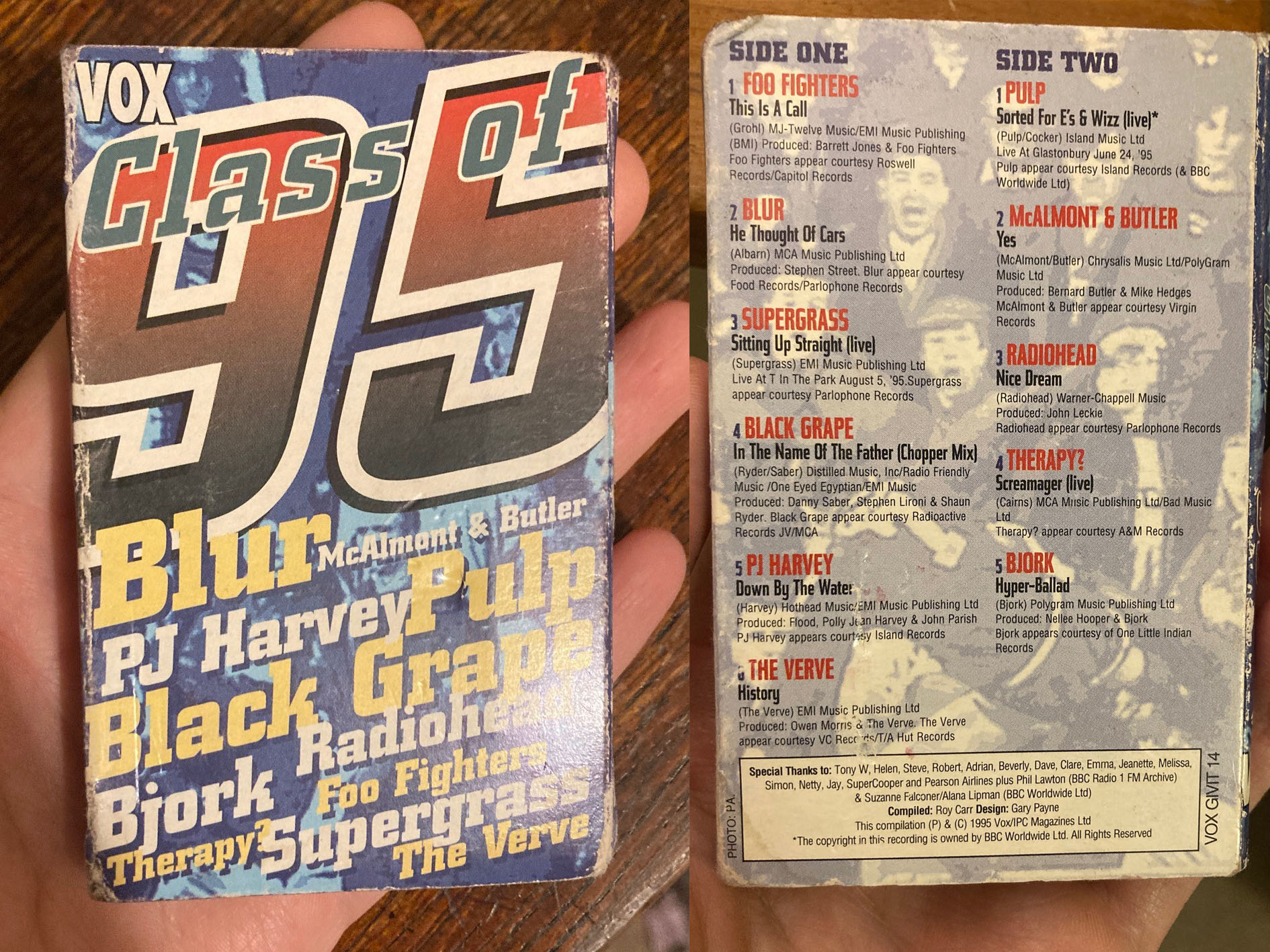
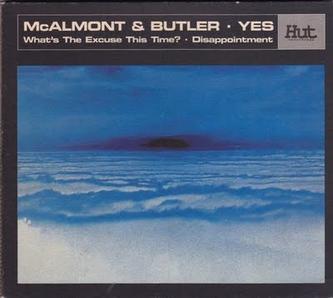
I don’t even own the official release of ‘Yes’ by McAlmont and Butler. I’ve captured it – and it has captured me – via a free cassette on the cover of Vox magazine. It is beautifully sandwiched between Pulp’s ‘Sorted for E’s and Wizz’ and Radiohead’s ‘Nice Dream’ on The Class of ’95, which is possibly the greatest free tape of the ’90s (and also features Bjork’s ‘Hyper-ballad’, PJ Harvey’s ‘Down by the Water’ and the Verve’s ‘History’, which I declare to be their best song, as ever, cruelly overlooked). ‘Yes’ conjures up the defiant emotions inside a break-up – in this case, painful exits by the duo from their respective bands, Suede and Thieves. Butler originally intended ‘Yes’ to be an instrumental, but then heard McAlmont’s voice and imagined how it might add the fine gold leaf to a song he had been privately crafting. When McAlmont talked about his love of Dusty Springfield and ’60s girl groups, the deal was sealed. In my room, rewinding my tape repeatedly, I find it to be a majestic heel-turning rebound of a song. Despite my heartbreaks still being mostly abstract, and hidden, I feel spiritually connected to the fuck you-ness of it all. Yes, I do feel better. It is a song meant to be sung through tears.
The greatest free tape of the ’90s?
David McAlmont has a voice as tall as a cathedral and on this song it soars through centuries of heartbreak up to the dusty gargoyles, beyond the untrodden walkways high up where medieval architects left their chisels. The melody is one that it is hard to believe didn’t exist before (why didn’t Burt Bacharach find these notes first?) with its flying buttress strings and heavenly vocal arches. I know that ‘Yes’ is a soaring pop masterpiece, one that even my dad would approve of, and yet it still gets lost in the rubble of Britpop: it’s never on the jukebox in the Keys, or any pub in Knaresborough, never the last song, only in my room. I know I’ll need to get a train just to hear it out loud in public, but in Leeds and York, I still look too young to be sure of getting into a bar. And so, I must wait in sickly seas of ‘Cotton Eye Joe’.
The only concessions to even mildly alternative music in my town seem to be ‘Wonderwall’ by Oasis, Pulp’s ‘Common People’ (although Jarvis Cocker would still get his glasses smashed up by the bins) and ‘The Riverboat Song’ by Ocean Colour Scene, which is everywhere and, to me, smells of farts and Superdrug aftershave. We girls shelter in safety with the Spice Girls and All Saints, with me always sceptical at the edge of the dancefl oor. ‘Yes’ has powers that draw me to both darker and brighter places, and I play it all the time in my head. I want to stub out my Marlboro Light and walk away, my shoe sole grinding into a gritty pavement, a glint of necklace on my collarbone. I want to flick my fringe and depart, the whole pub watching my exit. It’s just that right now, no one would notice. So, instead, I go home and play music loudly into the sky.
‘Yes’ first entered the universe on 15 May 1995
Throwing open my blind, I turn up the volume and let the music take me over. Like many of my window songs, it is a track that makes me look upwards, as if the future might be visible if I lift my chin. I gaze past the criss-cross of television aerials and into dark clouds. Something fl its by in my peripheral vision; swifts, chattering on the wing, or bats circling the chimney. I love this song because it doesn’t fit in. This beautiful male falsetto comes from another universe and, in its five minutes, it both drips with rage and offers renewal. The track is not ‘mad fer it’. It is mad because of it. Butler, to me, is rejecting the gloss of fame, the Brit Awards, the NME covers, the chance to be heard in a pub where thirty-year-old men wear too much hair gel and try to pull my school friends. Through ascending violins, and in McAlmont’s almost agitated vocal, I hear them call my name. When I am smarting from another teenage hurt triangle, it is ‘Yes’ that I fall back on, delivering me drunk but combative into darkness. I am framed by moonlit silver edges, alone again, considering how I might follow the bats to wherever it is they go.
The Cross Keys is our place of Friday celebration: a tenner in my pocket, a weekend spring in my step, the hope of a free pool table. For what seems like a whole summer – seven weeks at number one (bookended by Gary Barlow and Peter Andre, I spit this fact to my friends with disgust but they just shrug) – the Spice Girls soundtrack the start of our journeys into inebriation. Top of the Pops has moved to Fridays and so ‘Wannabe’, always at the end of the show, is the song often playing as I put on my make-up: grey eyeshadow, black eyeliner and mascara. Its stomping certainty drives me forwards, I want to be like Mel C: kicking out into the night with a tracksuited leg.
We love the message in the song: boys beware, our friends come first. In Jimmy’s, in the Cross Keys, in Shite Out, we care most of all about each other. There are dramas and disappearances. Kim’s gone AWOL in the sofa area, Yorkie’s phrase ‘I’m not well’ becomes a 20th-century meme, Hélène’s chatting to a random by the loos, and Jenny’s at the bar with a rum and coke and the boy she fancies. My hands are in my pockets, clutching coins, keys and lip balm as I watch the evening tumble around me. ‘Wannabe’ is not just our anthem; it seems to spark eye contact with other female clubbers too. I smile across the shiny, tacky fl oor, sometimes seeing my old sister’s peers, amused by the year 12 takeover. ‘Wannabe’ is our dancefloor rallying cry and we don’t want to let it go. We sing along, only semi-sarcastically, each taking a role. ‘Easy V doesn’t come for free,’ falls to Jenny in her little black dress. We pout and throw our heads back in laughter, a gaggle of tan lines in a cloud of White Musk by The Body Shop. Kim is Ginger, Yorkie and I fight for Sporty, Julie is Posh and Hélène just watches it all, amused, never quite Scary.
Hélène is the person I talk to the most, often to discuss the rest of our friendship circle and their concerning love of crap music and shit TV. We love the chaos of TFI Friday and Hélène has a mild crush on Chris Evans. We guffaw at hair carbonara, cooked up by Evans’s sidekick Jamie the student, which will later come back to haunt us in a choc-chip cookie. Hélène and I send each other long, hand-written letters in the post that dissect the latest gossip (‘our slapper in the sun’, is how we unkindly describe a schoolmate, while a tall boy with ‘Jarvis trousers’ and a jacket in military blue is apparently ‘just my type’). Sometimes a Morrissey postcard lands on my doormat and – knowing that my parents will see it first – Hélène fills it only with cryptic teen chat on the reverse. We sign off all our communications with ‘Ciao for now, you stupid cow’ and sometimes Hélène sticks in random clippings from magazines – an annotated Oasis logo ‘to be read backwards’ – Shit Is So Apparent In Oasis’ Music – and then a Trainspotting cut-out comic strip featuring our hero Rent Boy, aka Ewan McGregor. In one note, Hélène writes to me from a general studies exam, during which she is penning critiques of the other students rather than answering any questions. ‘Damn bloody exams,’ she writes, explaining that Julie is ‘using three gallons of Tipp-Ex every ten minutes’, while Liz can ‘only just be seen through the smoke coming off her pen’. This letter ends with a teasing line about one of the farm boys: ‘John’s trousers have a sensual split in them’. On the side of this letter, added later and in red, it says ‘44% = E’.
On week nights, I sometimes sit with Yorkie in the market place, her cassette of Spice in the tape slot of her blue Mini. ‘2 Become 1’, ‘Say You’ll Be There’. The rain beats down on the windscreen, our feet on the dashboard, a bottle of Pepsi rolling in the footwell. Like me, she feels exterior; it’s the fate of a tomboy in a provincial town. We both find comfort in the songs, both laughing at them, winding each other up, then fi nding poignant meaning in the lyrics. Radiohead’s ‘Thinking About You’ breaks us, often, which is why we return to the brassy cartoon world of Spice. Yorkie winds down the window to get rid of her ash. She’s talking about her band and their upcoming gig at the Harrogate Arms, a slightly intimidating venue full of goths and metalheads. I admire her bravery. I look through the twinkly lights of my cute hometown, hoping to see a different reflection in the Oxfam shop where I found my white Fred Perry.
We sometimes drive out to Brimham Rocks in Yorkie’s car to look for aliens on the horizon. We drive in convoy, with our mate Chris, who we all call Moggy, up ahead. The eerie hum of Menwith Hill, a US military listening post, hovers across the fields as we wait, looking for lights in the sky. We constantly shush each other’s chat so as not to miss possible communication from extra-terrestrials hiding in North Yorkshire’s hedgerows. Moggy brings a rucksack that he calls the ‘bag of delights’: inside it, a two-litre bottle of Coke, which we all swig, Wagon Wheels and bags of Skips, which we crack out when the alien craft fail to show.


 For your savage amusement